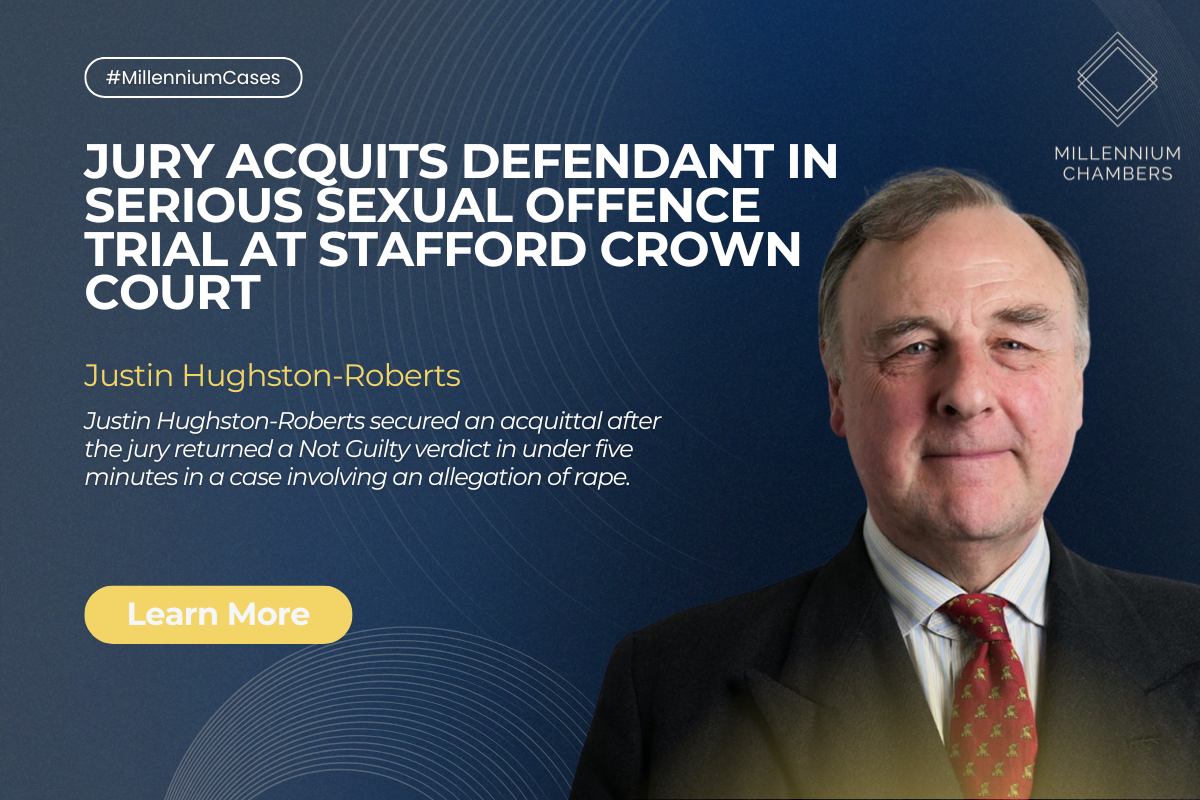
Millennium Chambers reports a recent acquittal secured by Justin Hughston-Roberts at Stafford Crown Court, where the defendant faced an allegation of rape.
The prosecution case centred on DNA evidence, with the Crown’s expert expressing the view that any material from an earlier consensual encounter would not be expected to persist until the date of the alleged offence.
The defendant, however, had consistently maintained that the DNA resulted from a previous consensual encounter that had taken place some ten days before the date alleged by the complainant.
Representing the defendant, Justin Hughston-Roberts conducted a detailed analysis of the scientific evidence put forward by the Crown. Through focused cross-examination, the defence explored alternative explanations for the presence of DNA and examined the assumptions underpinning the expert opinion relied upon by the prosecution.
This approach highlighted that the scientific evidence was not determinative and that an interpretation consistent with innocence remained entirely viable.
Following the close of evidence, the jury retired and returned a unanimous verdict of Not Guilty in under five minutes.
This outcome underscores the importance of robust scrutiny of forensic evidence, the role of careful and evidence-based advocacy in testing expert assumptions, and the essential safeguards provided by the jury trial system in ensuring that all evidence is evaluated fairly and independently.
For instructions or enquiries relating to serious criminal matters, please contact our clerking team.